A lot of postnatal mums ask themselves when they should be safe to start exercising after childbirth, and the answer is that: it depends on your individual circumstances.


Tauranga Pelvic Health Physiotherapy
Treatment and prevention of bladder, sexual and anorectal problems – Pre and post-natal
A lot of postnatal mums ask themselves when they should be safe to start exercising after childbirth, and the answer is that: it depends on your individual circumstances.
Have you ever heard of this term? Or maybe you know a friend who sometimes needs to rush to the toilet to urinate and may leak before getting there? The symptoms include:


You call the Pelvic Floor Physiotherapist and book the first appointment.
It’s the first step in seeking help for your problem! Okay, now what? What happens during this first consultation?
Continue reading “How is the first appointment with a Pelvic Floor Physiotherapist?”
Around four out of ten women suffer from some type of pain during sexual intercourse. The term dyspareunia simply means “painful sexual intercourse”. Pain can happen after intercourse, during intercourse or even before intercourse takes place.
Continue reading “Pain during sex”The prostate, a small-sized gland, located at the base of the bladder, can be the site of two distinct processes. The first is a benign growth, called hyperplasia. The second is prostate cancer, which appears associated or not with benign growth and which appears almost always after men turn 50 years old.

Continue reading “Urine leakage following Prostate Surgery: Let’s talk about it!”
Pregnancy is a period of intense musculoskeletal, physical and emotional changes.

The physiotherapist is able to assess and monitor physical changes, focusing primarily on maintaining well-being. We are also able to examine and treat the patient who has specific musculoskeletal impairments, incorporating knowledge of tissue damage and regeneration to the changes that occur during pregnancy.
Continue reading “What is the importance of Pelvic Floor Physiotherapy during pregnancy?”
What is it?
Continue reading “Pelvic organ prolapse”Prolapse is the displacement of an organ from its normal anatomical position.
 To answer this question, we first need to differentiate between normal and common in this case. Normal is something that conforms to what is expected, with what is right, natural. Common is what is frequent, which is seen a lot.
Continue reading “Is urine leakage normal?”
Evelyn Mendel participated in the course on Physical Therapy in Female Sexual Dysfunctions this past weekend with the Pelvic Floor Physio Carla Pereira, a reference in the area of sexuality! Evelyn also helped organize the course to bring to Porto Alegre/ Brazil the very best in the study of Physiotherapy and Female Sexuality.

It is always import to continue my professional development to always improve the sex life and quality of life of women!
#female sexuality
#vaginismus #aucklandpelvicfloorphysio #pelvicfloorphysio #pelvicpain#painduringsex
A pelvic floor musculature that will not cause problems is one that is and will remain healthy.
It is estimated that around 40% of women between 45 and 60 years of age present one of the main disorders caused by alterations in the pelvic floor, called urinary incontinence. Among its causes is muscle weakness.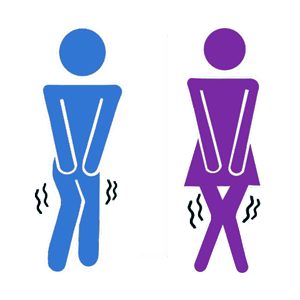
Several other problems can arise as a consequence of an unhealthy pelvic floor, such as: Pain during intercourse, problems with arousal and orgasm (40% of women report having at least 1 symptom related to sexual function), erectile dysfunction and other sexual dysfunctions, prolapse of pelvic organs, urinary retention and constipation, incontinence of gas or feces.
Continue reading “How do I know if my pelvic floor won’t give me problems?”
 Tauranga Pelvic Health Physiotherapy