
It can also be called Diastasis recti of the abdominal muscles (DRAM) or tummy gap. It is the widening and thinning of a small connective tissue which runs down our midlines, dividing our six pack muscle into two halves. This connective tissue is called the linea alba and it runs all the way from the bottom of our sternum to our pubic bone. As the tissue widens, the two halves of the six pack muscle move further apart, and this is where the term ‘tummy muscle separation’ comes from.
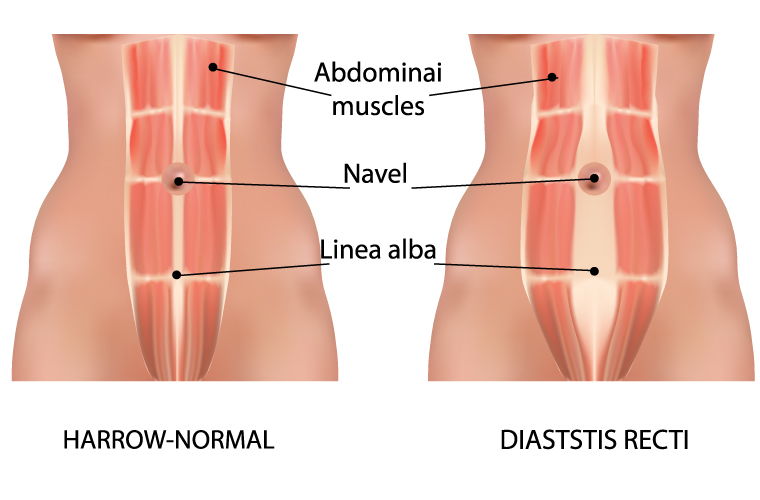
The widening and thinning of our linea alba is a normal part of pregnancy and during the
third trimester 100% of pregnant women will have some degree of diastasis. This is a totally natural part of pregnancy and is actually really important because it enables our bellies to expand and make space for our growing baby.
It usually resolves itself within eight weeks of delivery. About 40% of those who have diastasis recti still have it by six months postpartum.
DRAM may cause cosmetic impairment, abdominal and lower back pain, increase your risk of prolapse or hernia, as well as decrease the strength of the trunk muscles. It has been suggested that it is not the diastasis per se but rather the bulging or protrusion of the entire abdominal wall that causes functional disability.

Common signs of diastasis recti during the postpartum period are:
- A visible bulge or “pooch” that protrudes just above or below the belly button.
- Softness or jelly-like feeling around your belly button.
- Doming or tenting of the middle of your stomach during activities like lifting, rolling over, or sitting up.
- Difficulty lifting objects, walking or performing everyday tasks.
- Pelvic or hip pain.
- Low back pain.
- Poor posture.
- Urine leaks when you sneeze or cough.
- Feeling weak in your abdominals.
If you suspect that you have abs separation that hasn’t resolved itself after your pregnancy, your best bet is to see a physical therapist who specializes in Women’s Health. Your Physio will feel your stomach muscles to assess if your abdominal muscles have separated, and will also evaluate factors such as your posture, breathing, flexibility and overall muscle strength.

 Tauranga Pelvic Health Physiotherapy